Automatic doors are designed to provide convenience, accessibility, and smooth entry for buildings. They are commonly used in shopping centres, offices, hospitals, hotels, and airports because they improve traffic flow and create a modern experience. However, like any mechanical system, automatic doors can develop problems over time.
Some issues are minor and easy to fix, while others may require professional attention. Ignoring small problems can lead to expensive repairs, safety risks, and operational downtime. In this blog, we will explore the most common automatic door problems, their causes, and practical solutions to keep your doors working properly.
Door Not Opening Properly
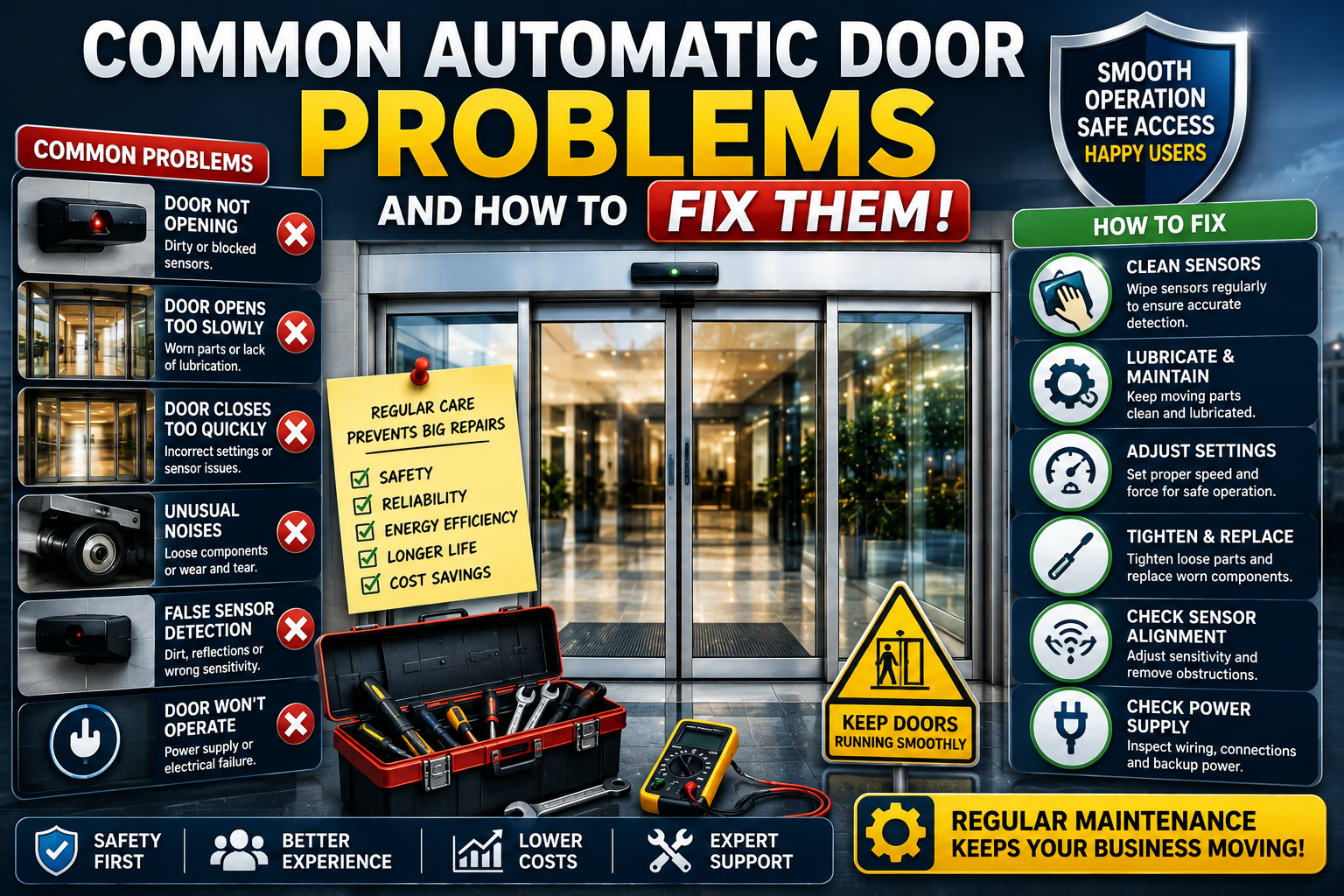
One of the most common issues is when the automatic door does not open when someone approaches. This usually happens because of dirty or blocked sensors. Dust, dirt, or objects near the sensor area can interfere with detection.
The first step is to clean the sensors carefully with a soft cloth. Check for anything blocking the sensor’s view. If the problem continues, the sensor alignment or electrical connection may need adjustment. In such cases, professional inspection is recommended.
Door Opens Too Slowly
Slow door movement can frustrate users and create delays in busy buildings. This issue often occurs because of worn-out motors, poor lubrication, or dirt buildup in the tracks.
Regular cleaning and proper lubrication can improve movement significantly. It is also important to inspect rollers and moving parts for wear. If the motor struggles even after maintenance, it may need repair or replacement.
Door Closes Too Quickly
A door that closes too fast can become a serious safety hazard. This problem is often caused by incorrect speed settings or sensor malfunction. High closing force may also indicate issues with the control system.
Door speed should always be adjusted according to safety standards. Testing the door regularly helps ensure it closes smoothly without sudden movement. If adjustments do not solve the problem, the control board should be inspected by a technician.
Unusual Noises During Operation
Grinding, squeaking, or rattling sounds usually mean that something inside the door system needs attention. Loose screws, damaged rollers, or lack of lubrication are common causes of unusual noise.
Ignoring these sounds can lead to larger mechanical failures over time. Tightening loose components and applying proper lubrication often solves the issue. Persistent noise may indicate worn parts that require replacement.
Sensor Problems and False Detection
Automatic door sensors can sometimes react incorrectly. The door may open even when nobody is nearby or fail to open when someone approaches. Reflections, sunlight, insects, or dirty sensor lenses can trigger false readings.
Cleaning the sensors and checking their positioning usually improves performance. Adjusting sensor sensitivity may also help reduce unnecessary door openings. Advanced sensor systems are more reliable in difficult environments.
Door Stops Midway
Sometimes automatic doors stop while opening or closing. This can happen because of obstacles in the track, damaged rollers, or electrical interruptions. Safety sensors may also stop the door if they detect something in the way.
Inspect the tracks for debris and make sure nothing blocks the door path. Check for loose wiring or unstable power supply. If the issue happens repeatedly, professional troubleshooting is necessary.
Power Supply and Electrical Failures
Automatic doors depend heavily on electrical systems. Power outages, faulty wiring, or damaged control boards can stop the door completely. Electrical issues are especially common in older systems.
Backup power systems help maintain operation during outages. Regular inspection of electrical connections reduces the risk of unexpected failures. Electrical repairs should always be handled by qualified technicians for safety reasons.
Weather-Related Door Problems
Extreme weather conditions can affect automatic door performance. Cold temperatures may freeze tracks or slow movement, while heat can strain motors and sensors. Rain and humidity can damage electrical components over time.
Weather-resistant seals and regular seasonal maintenance help protect the system. Keeping entrances clean and dry also reduces weather-related wear and tear.
Misaligned Tracks and Rollers
Automatic sliding doors rely on properly aligned tracks and rollers. If these parts become loose or damaged, the door may shake, jam, or move unevenly.
Track alignment should be checked regularly, especially in high-traffic areas. Replacing worn rollers and tightening hardware improves door stability. Proper alignment also reduces stress on the motor and extends system lifespan.
Lack of Regular Maintenance
Many automatic door problems happen simply because maintenance is ignored. Dirt buildup, worn components, and outdated systems slowly reduce performance over time.
A regular maintenance schedule helps identify problems early and prevents major breakdowns. Cleaning sensors, testing safety systems, and lubricating moving parts are simple steps that make a big difference. Preventive maintenance also improves safety and reduces repair costs.
When to Call a Professional
Some minor issues can be solved with basic cleaning and inspection, but larger problems require professional help. If the door behaves unpredictably, stops completely, or shows electrical faults, a trained technician should inspect it immediately.
Professional servicing ensures the system meets safety standards and operates correctly. Experts can also detect hidden problems before they become serious. Regular professional inspections are the best way to keep automatic doors safe and reliable.
Conclusion
Automatic doors provide convenience and accessibility, but they require proper care to perform at their best. Problems such as slow movement, faulty sensors, unusual noises, and electrical failures are common but often preventable.
By understanding these issues and following regular maintenance practices, businesses can avoid costly repairs and improve safety. Quick attention to small problems helps extend the life of the system and ensures smooth operation every day. A well-maintained automatic door creates a better experience for everyone entering your building.