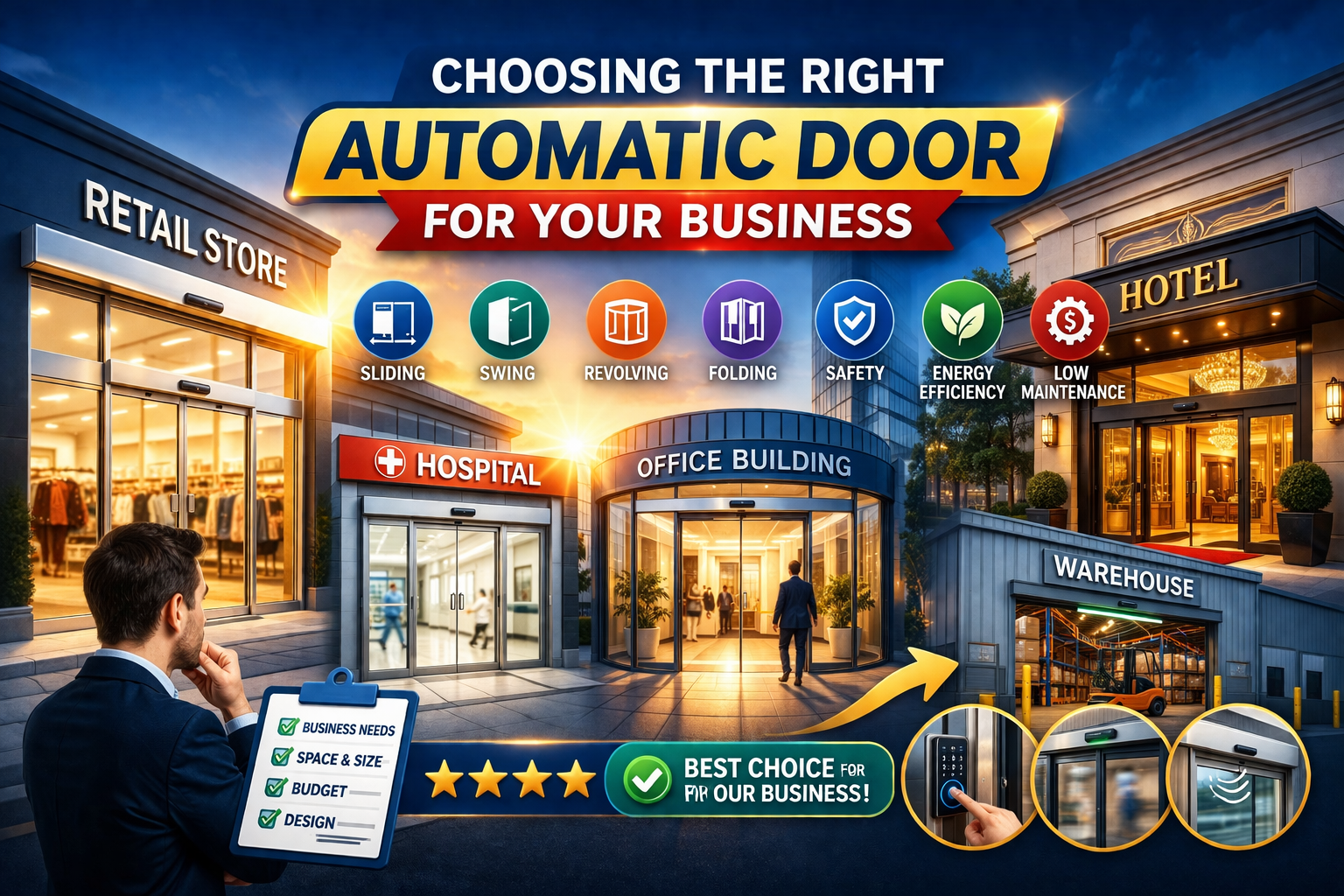
Automatic doors are a great investment for any business. They make entry easy, improve accessibility, and give a modern look to your building. Whether you run a retail store, hospital, office, or hotel, the right automatic door can improve customer experience and daily operations.
But choosing the right automatic door is not always simple. There are different types, features, and factors to consider. Picking the wrong one can lead to higher costs, poor performance, and even safety issues. In this guide, we will help you understand how to choose the best automatic door for your business needs.
Understanding Different Types of Automatic Doors
There are several types of automatic doors available, and each serves a different purpose. Sliding doors are the most common and are perfect for places with high foot traffic like malls and supermarkets. They save space and allow smooth entry and exit.
Swing doors are another option, often used in offices and smaller buildings. They open like regular doors but operate automatically. Revolving doors are ideal for large buildings because they help control airflow and save energy. Folding doors are useful in tight spaces where there is limited room for sliding or swinging.
Considering Your Business Needs and Traffic Flow
Before choosing a door, you need to understand how your business operates. Think about how many people enter and exit your building daily. High-traffic areas need durable doors that can handle constant use without slowing down.
For smaller businesses, a simple automatic door system may be enough. However, busy environments like hospitals or shopping centres require advanced systems with faster response times. Matching the door type to your traffic flow ensures smooth operation and better user experience.
Space and Layout Requirements
The available space plays a big role in choosing the right automatic door. Sliding doors are ideal for wide entrances, while swing doors need enough space to open fully. If your entrance is narrow, folding doors may be a better option.
You should also consider the surrounding layout, such as walls, furniture, and walkways. Proper planning ensures the door does not block movement or create congestion. A well-fitted door improves both safety and convenience.
Energy Efficiency and Climate Control
Energy efficiency is an important factor for modern businesses. Automatic doors can help reduce energy loss by opening only when needed and closing quickly. This helps maintain indoor temperature and lowers heating or cooling costs.
Revolving doors are especially effective in controlling airflow in large buildings. Some automatic doors also come with sensors that adjust operation based on traffic levels. Choosing an energy-efficient door can save money in the long run and support environmental goals.
Safety Features You Should Look For
Safety should always be a top priority when selecting an automatic door. Look for doors with reliable sensors that detect people and objects. This prevents the door from closing when someone is in the way.
Other important safety features include emergency stop functions, backup power systems, and warning signs. These features protect users and ensure the door operates safely even during power failures or emergencies. A safe door system builds trust and reduces risks.
Design and Aesthetic Appeal
Automatic doors are not just functional—they also contribute to the look of your business. A well-designed door creates a strong first impression for customers and visitors. Glass doors with sleek frames are popular for modern buildings.
You can choose from different finishes, colours, and styles to match your brand image. For example, a luxury hotel may prefer elegant glass doors, while a warehouse may focus more on durability than appearance. The right design enhances your overall business environment.
Maintenance and Long-Term Costs
Every automatic door requires maintenance to keep it working properly. Before making a decision, consider the long-term maintenance needs and costs. Some doors may be cheaper upfront but require frequent repairs.
Choose a system that is easy to maintain and has reliable support from technicians. Regular servicing helps prevent breakdowns and extends the lifespan of the door. Investing in quality equipment can save money over time.
Integration with Smart Technology
Modern automatic doors can be integrated with smart building systems. This allows you to control and monitor door performance remotely. Features like access control, usage tracking, and real-time alerts improve efficiency.
Smart integration is especially useful for large businesses with multiple locations. It provides better control, improves security, and helps in planning maintenance. As technology continues to grow, smart doors are becoming a valuable addition to modern businesses.
Compliance with Local Regulations
Different regions have safety and accessibility standards for automatic doors. It is important to choose a door that meets these requirements. This includes proper sensor placement, door speed limits, and accessibility features for people with disabilities.
Following regulations not only ensures safety but also protects your business from legal issues. Always work with trusted suppliers who understand local codes and standards.
Conclusion
Choosing the right automatic door for your business is an important decision. It affects safety, energy efficiency, customer experience, and overall performance. By understanding your needs, space, and budget, you can select a door that fits perfectly.
From sliding and swinging doors to advanced smart systems, there are many options available. Focus on quality, safety features, and long-term value rather than just the initial cost. The right automatic door will not only improve your building but also create a smooth and welcoming experience for everyone who walks through it.