Posted on

Common Automatic Door Problems and How to Fix Them

Common Automatic Door Problems and How to Fix Them

Automatic doors are designed to provide convenience, accessibility, and smooth entry for buildings. They are commonly used in shopping centres, offices, hospitals, hotels, and airports because they improve traffic flow and create a modern experience. However, like any mechanical system, automatic doors can develop problems over time.

Some issues are minor and easy to fix, while others may require professional attention. Ignoring small problems can lead to expensive repairs, safety risks, and operational downtime. In this blog, we will explore the most common automatic door problems, their causes, and practical solutions to keep your doors working properly.

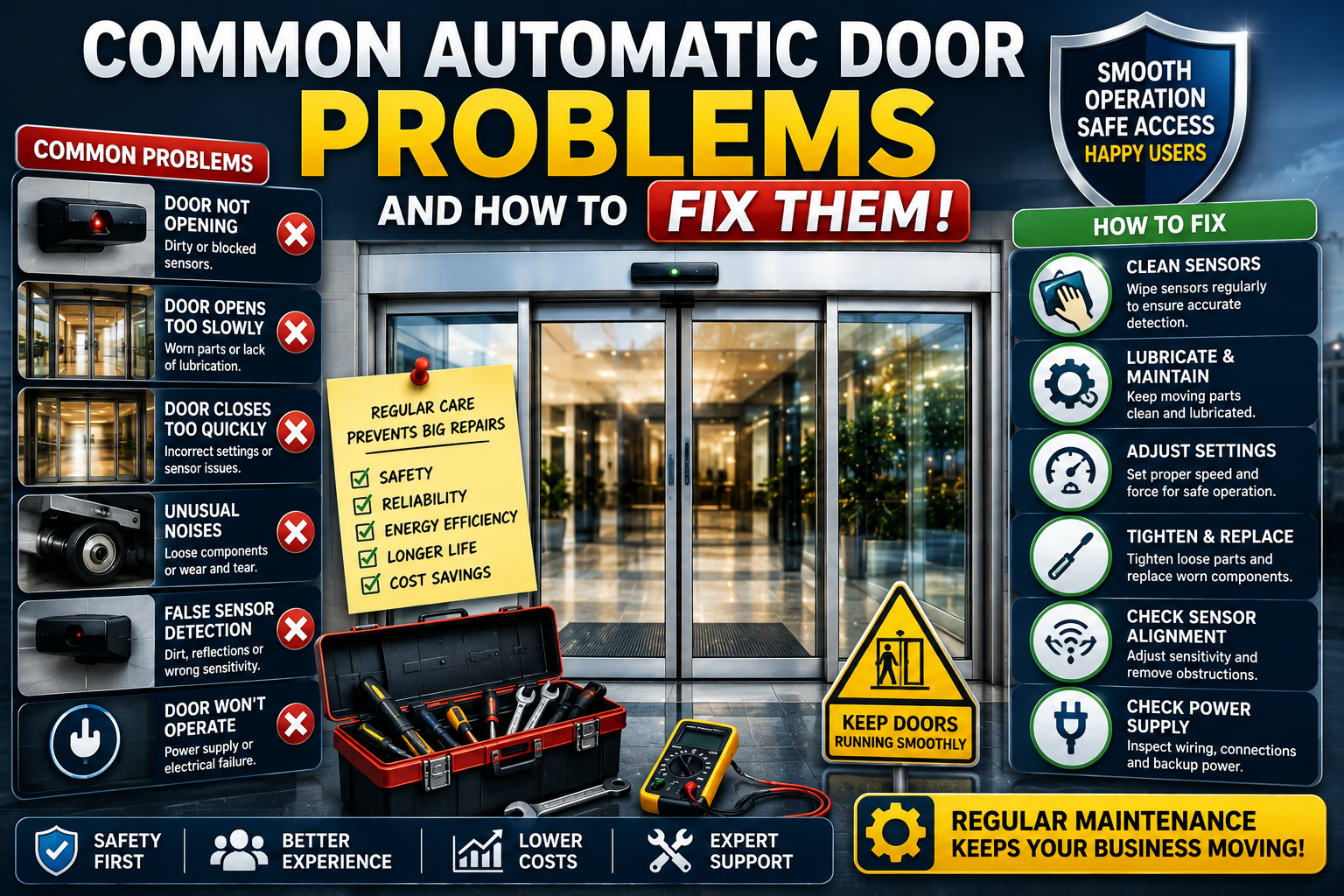
Door Not Opening Properly

One of the most common issues is when the automatic door does not open when someone approaches. This usually happens because of dirty or blocked sensors. Dust, dirt, or objects near the sensor area can interfere with detection.

The first step is to clean the sensors carefully with a soft cloth. Check for anything blocking the sensor’s view. If the problem continues, the sensor alignment or electrical connection may need adjustment. In such cases, professional inspection is recommended.

Door Opens Too Slowly

Slow door movement can frustrate users and create delays in busy buildings. This issue often occurs because of worn-out motors, poor lubrication, or dirt buildup in the tracks.

Regular cleaning and proper lubrication can improve movement significantly. It is also important to inspect rollers and moving parts for wear. If the motor struggles even after maintenance, it may need repair or replacement.

Door Closes Too Quickly

A door that closes too fast can become a serious safety hazard. This problem is often caused by incorrect speed settings or sensor malfunction. High closing force may also indicate issues with the control system.

Door speed should always be adjusted according to safety standards. Testing the door regularly helps ensure it closes smoothly without sudden movement. If adjustments do not solve the problem, the control board should be inspected by a technician.

Unusual Noises During Operation

Grinding, squeaking, or rattling sounds usually mean that something inside the door system needs attention. Loose screws, damaged rollers, or lack of lubrication are common causes of unusual noise.

Ignoring these sounds can lead to larger mechanical failures over time. Tightening loose components and applying proper lubrication often solves the issue. Persistent noise may indicate worn parts that require replacement.

Sensor Problems and False Detection

Automatic door sensors can sometimes react incorrectly. The door may open even when nobody is nearby or fail to open when someone approaches. Reflections, sunlight, insects, or dirty sensor lenses can trigger false readings.

Cleaning the sensors and checking their positioning usually improves performance. Adjusting sensor sensitivity may also help reduce unnecessary door openings. Advanced sensor systems are more reliable in difficult environments.

Door Stops Midway

Sometimes automatic doors stop while opening or closing. This can happen because of obstacles in the track, damaged rollers, or electrical interruptions. Safety sensors may also stop the door if they detect something in the way.

Inspect the tracks for debris and make sure nothing blocks the door path. Check for loose wiring or unstable power supply. If the issue happens repeatedly, professional troubleshooting is necessary.

Power Supply and Electrical Failures

Automatic doors depend heavily on electrical systems. Power outages, faulty wiring, or damaged control boards can stop the door completely. Electrical issues are especially common in older systems.

Backup power systems help maintain operation during outages. Regular inspection of electrical connections reduces the risk of unexpected failures. Electrical repairs should always be handled by qualified technicians for safety reasons.

Weather-Related Door Problems

Extreme weather conditions can affect automatic door performance. Cold temperatures may freeze tracks or slow movement, while heat can strain motors and sensors. Rain and humidity can damage electrical components over time.

Weather-resistant seals and regular seasonal maintenance help protect the system. Keeping entrances clean and dry also reduces weather-related wear and tear.

Misaligned Tracks and Rollers

Automatic sliding doors rely on properly aligned tracks and rollers. If these parts become loose or damaged, the door may shake, jam, or move unevenly.

Track alignment should be checked regularly, especially in high-traffic areas. Replacing worn rollers and tightening hardware improves door stability. Proper alignment also reduces stress on the motor and extends system lifespan.

Lack of Regular Maintenance

Many automatic door problems happen simply because maintenance is ignored. Dirt buildup, worn components, and outdated systems slowly reduce performance over time.

A regular maintenance schedule helps identify problems early and prevents major breakdowns. Cleaning sensors, testing safety systems, and lubricating moving parts are simple steps that make a big difference. Preventive maintenance also improves safety and reduces repair costs.

When to Call a Professional

Some minor issues can be solved with basic cleaning and inspection, but larger problems require professional help. If the door behaves unpredictably, stops completely, or shows electrical faults, a trained technician should inspect it immediately.

Professional servicing ensures the system meets safety standards and operates correctly. Experts can also detect hidden problems before they become serious. Regular professional inspections are the best way to keep automatic doors safe and reliable.

Conclusion

Automatic doors provide convenience and accessibility, but they require proper care to perform at their best. Problems such as slow movement, faulty sensors, unusual noises, and electrical failures are common but often preventable.

By understanding these issues and following regular maintenance practices, businesses can avoid costly repairs and improve safety. Quick attention to small problems helps extend the life of the system and ensures smooth operation every day. A well-maintained automatic door creates a better experience for everyone entering your building.
Posted on

How Weather Conditions Affect Automatic Door Performance

How Weather Conditions Affect Automatic Door Performance

Automatic doors are built to handle daily use, but weather conditions can still affect how well they perform. Rain, heat, cold temperatures, wind, and humidity all impact the movement and reliability of automatic doors. In busy commercial buildings, even small weather-related issues can lead to slow operation, higher energy costs, or safety concerns.

Many business owners only focus on maintenance when a problem appears. However, understanding how weather affects automatic doors can help prevent damage before it happens. In this blog, we will explore how different weather conditions influence automatic door systems and what you can do to keep them working smoothly all year long.

Impact of Extreme Heat on Automatic Doors

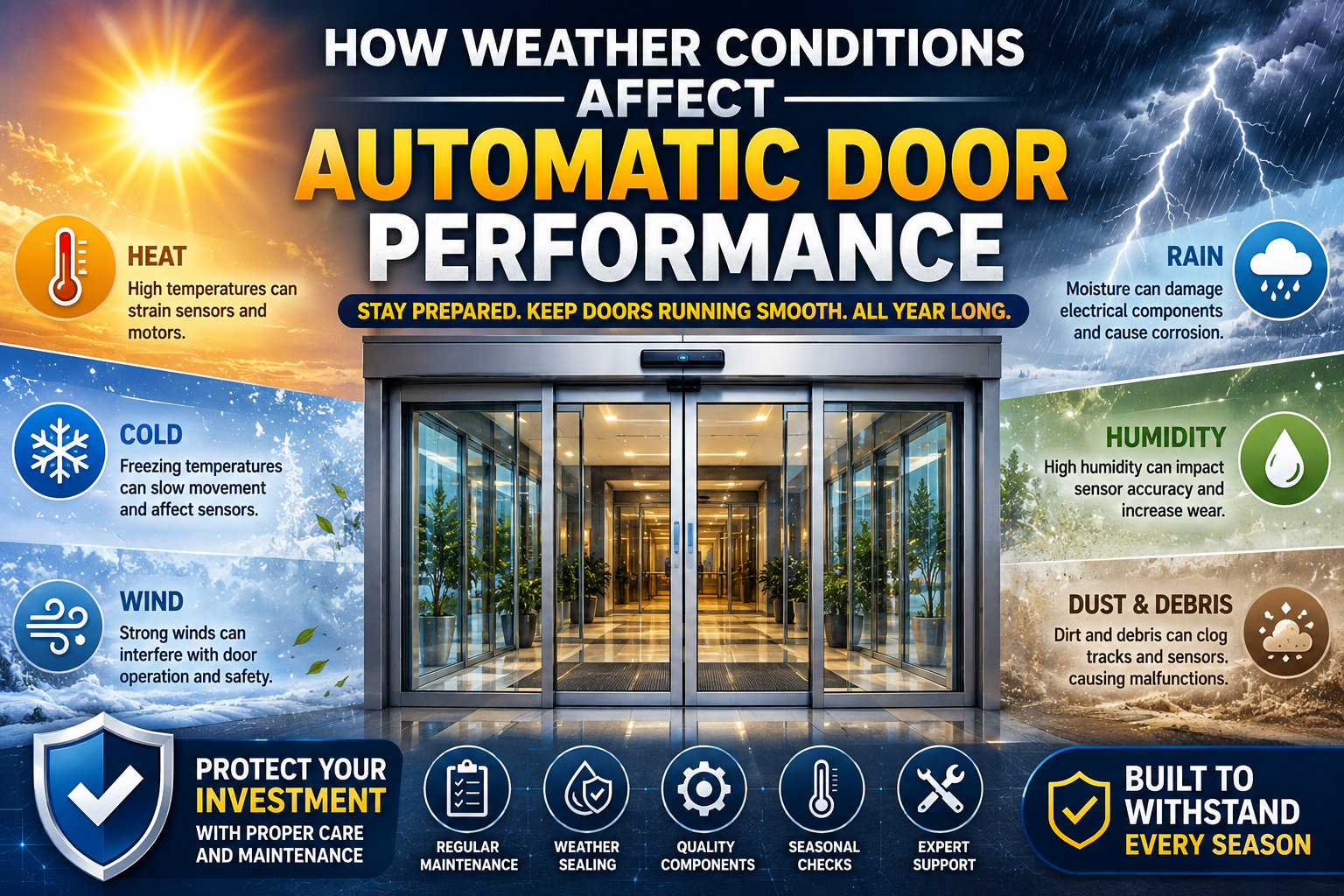
Hot weather can affect both the mechanical and electronic parts of an automatic door system. Continuous exposure to high temperatures may cause motors to overheat or reduce the performance of sensors. Metal components can also expand slightly in extreme heat, affecting alignment and smooth movement.

Glass doors exposed to strong sunlight may create extra strain on cooling systems because they allow heat to enter the building. In some cases, heat can even interfere with motion sensors, causing unnecessary door openings. Regular inspection during summer helps reduce these problems and keeps the system operating efficiently.

Cold Temperatures and Freezing Conditions

Cold weather creates different challenges for automatic doors. Ice, frost, and freezing temperatures can make doors slower to open and close. Tracks and rollers may become stiff, especially if lubrication is not suitable for cold conditions.

Snow and ice buildup around entrances can also block sensors or prevent smooth movement. In severe winter conditions, motors work harder, which increases wear on the system. Proper weather-resistant seals and winter maintenance checks help protect the door from cold-related damage.

How Rain and Moisture Affect Door Systems

Rainwater and moisture can damage electrical and mechanical components if the system is not properly protected. Water entering sensor units or control panels may lead to short circuits or inconsistent performance.

Moisture can also cause rust and corrosion on metal parts over time. Sliding door tracks are especially vulnerable because water and dirt often collect in them. Regular cleaning and waterproof sealing help prevent long-term moisture damage and improve durability.

The Effect of Strong Winds on Automatic Doors

Wind is one of the most common causes of automatic door problems, especially in large commercial buildings. Strong gusts can force doors to open unexpectedly or make it difficult for them to close fully.

High wind pressure may also strain motors and hinges. In revolving doors, wind can affect balance and smooth rotation. Installing wind-resistant automatic doors and adjusting sensor sensitivity can help maintain safe and stable operation in windy environments.

Humidity and Sensor Performance

High humidity levels can interfere with electronic systems and reduce sensor accuracy. Condensation may form inside sensitive components, causing delayed responses or false detections.

Humidity also increases the risk of corrosion, especially in coastal areas where salty air is present. Businesses located in humid climates should schedule regular inspections to ensure sensors and electrical parts remain dry and functional.

Dust, Sand, and Airborne Debris

In dry or windy environments, dust and debris can easily collect in automatic door tracks and sensors. Sand particles may damage moving parts and create friction, leading to noisy or uneven operation.

Dirty sensors may fail to detect people correctly, creating safety concerns. Frequent cleaning is essential in areas with high dust exposure. Protective covers and sealed components also help reduce the impact of airborne debris.

Energy Efficiency During Seasonal Changes

Weather conditions directly affect a building’s energy use, and automatic doors play an important role in controlling indoor temperature. During summer and winter, doors that stay open too long allow heated or cooled air to escape.

Modern automatic doors often include smart settings that adjust opening times based on traffic and temperature conditions. Proper insulation and weather sealing improve energy efficiency and reduce utility costs throughout the year.

Importance of Seasonal Maintenance

Seasonal maintenance helps automatic doors perform better in changing weather conditions. Before winter, technicians should inspect seals, lubricate moving parts, and test sensors. Before summer, cooling and ventilation around electronic components should be checked.

Routine maintenance reduces the risk of sudden failures during extreme weather. It also helps identify small issues before they become expensive repairs. Businesses that follow seasonal maintenance schedules usually experience fewer operational problems.

Choosing Weather-Resistant Automatic Doors

Not all automatic doors are designed for the same environment. Businesses located in coastal, snowy, or extremely hot regions should choose doors built specifically for those conditions.

Weather-resistant doors use stronger materials, better sealing systems, and advanced sensors that can handle temperature changes. Investing in the right door system improves long-term performance and lowers maintenance costs.

Conclusion

Weather has a major impact on the performance, safety, and lifespan of automatic doors. Heat, cold, rain, wind, humidity, and dust all create unique challenges that can affect daily operation. Without proper care, these conditions may lead to breakdowns, higher energy costs, and safety risks.

By understanding how weather affects automatic doors and following regular maintenance practices, businesses can keep their systems running smoothly year-round. Choosing weather-resistant solutions and performing seasonal inspections will help improve reliability, efficiency, and user safety in every season.

Posted on

How Automatic Doors Work: Sensors, Safety, and Smart Technology Explained

Automatic doors have become a standard feature in modern commercial buildings, hospitals, shopping centres, airports, and even residential complexes. They are designed to improve convenience, accessibility, hygiene, and energy efficiency. But behind their smooth, hands-free operation lies a sophisticated system of sensors, control units, and safety mechanisms.

In this guide, we break down exactly how automatic doors work, focusing on sensors, safety systems, and smart technology integration.

What Is an Automatic Door System?

An automatic door system is an electromechanical setup that opens and closes doors without manual effort. It typically consists of:

  • Motion or presence sensors
  • A control system (controller unit)
  • Motor and drive mechanism
  • Safety devices
  • Door panels and track system

When a person approaches, the system detects movement and triggers the door to open automatically.

How Automatic Doors Detect Movement (Sensor Technology)

The core of any automatic door system is its sensor technology. These sensors determine when and how the door should operate.

1. Motion Sensors (Radar-Based Sensors)

Radar sensors detect movement in front of the door. When a person approaches, they send a signal to the control system to open the door.

  • Best for: High-traffic entrances (malls, airports)
  • Advantage: Fast response time

2. Infrared Sensors

Infrared sensors detect heat signatures or body presence within a defined range.

  • Best for: Indoor environments like offices and hospitals
  • Advantage: More precise detection in controlled spaces

3. Pressure Sensors (Floor Mats)

These are pressure-sensitive pads installed on the floor that activate when stepped on.

  • Best for: Security-sensitive areas
  • Advantage: Only activates when someone is directly at the entrance

4. Optical Sensors (Laser-Based Systems)

Advanced doors use laser or optical beams to detect objects and movement.

  • Best for: Smart buildings and premium installations
  • Advantage: High accuracy and safety detection

The Role of the Control System

Once a sensor detects movement, it sends a signal to the control unit, which acts as the “brain” of the automatic door system.

The control system:

  • Processes sensor input
  • Activates the motor
  • Controls opening and closing speed
  • Monitors safety functions
  • Prevents accidental closures

Modern systems can even be programmed for timing, traffic flow, and energy efficiency.

Motor and Door Mechanism

The motor is responsible for physically moving the door panels. Depending on the type of automatic door, different mechanisms are used:

Sliding Doors

  • Use belt-driven or chain-driven motors
  • Doors slide horizontally along a track

Swing Doors

  • Use hydraulic or electromechanical arms
  • Doors open inward or outward

Folding Doors

  • Panels fold in sections
  • Ideal for compact spaces

The motor ensures smooth, controlled movement to avoid sudden jerks or safety risks.

Built-in Safety Features in Automatic Doors

Safety is a critical part of automatic door design, especially in high-traffic environments.

1. Obstacle Detection Sensors

These sensors detect if a person or object is in the doorway and prevent the door from closing.

2. Anti-Pinch Mechanisms

Designed to stop the door if resistance is detected during closing, preventing injuries.

3. Emergency Manual Override

In case of power failure, doors can be manually operated for safe exit.

4. Safety Edges

Rubber or pressure-sensitive edges that stop movement when contact is detected.

5. Fire Safety Integration

Automatic doors can connect with fire alarm systems to:

  • Open automatically during emergencies
  • Or close to contain fire and smoke depending on design

Smart Technology in Modern Automatic Doors

With advancements in building automation, automatic doors are now part of smart building ecosystems.

1. IoT Integration

Doors can be connected to central building management systems for remote monitoring and control.

2. Access Control Systems

Integration with:

  • Key cards
  • Biometric scanners
  • Facial recognition systems

This improves security in offices, hospitals, and restricted areas.

3. Energy Efficiency Features

Smart doors reduce energy loss by:

  • Opening only when needed
  • Adjusting sensitivity based on traffic flow
  • Working with HVAC systems to maintain indoor temperature

4. AI-Based Sensors

Advanced systems use artificial intelligence to:

  • Differentiate between humans and objects
  • Reduce false triggers
  • Optimize opening speed based on traffic patterns

Why Automatic Doors Are So Efficient

Automatic doors are not just about convenience—they are designed for performance and efficiency:

  • Reduce physical contact (improves hygiene)
  • Improve accessibility for disabled users
  • Enhance customer experience in commercial spaces
  • Save energy by minimizing air exchange
  • Increase building security and control

Final Thoughts

Automatic doors combine mechanical engineering, sensor technology, and smart automation to create seamless entry systems. From motion detection to AI-powered control systems, these doors are becoming more intelligent and energy-efficient every year.

Understanding how they work helps businesses choose the right system based on traffic, security needs, and building design.

If you are planning to install or upgrade automatic doors, focusing on sensor quality, safety features, and smart integration will ensure long-term performance and reliability.

Posted on

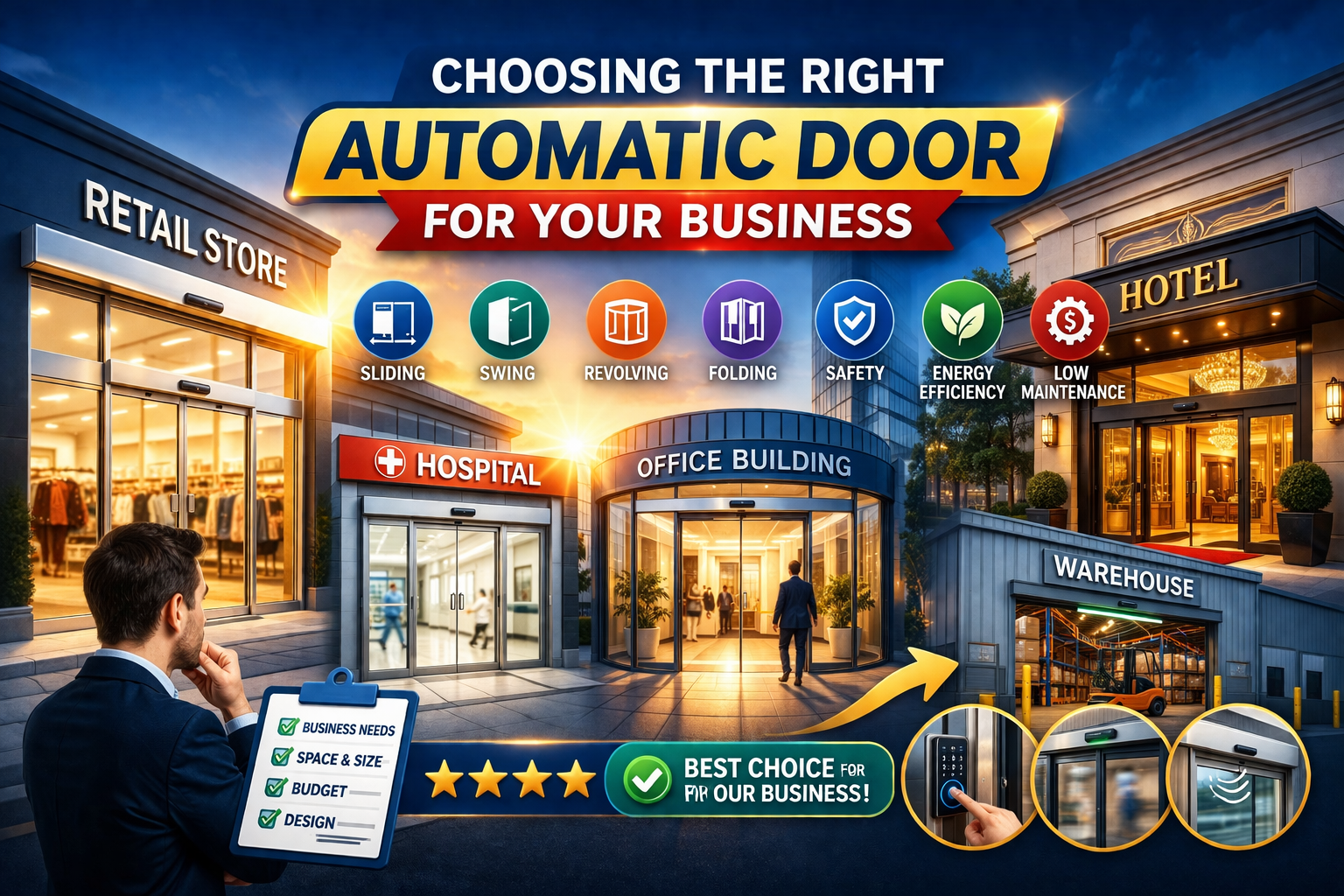
Choosing the Right Automatic Door for Your Business: A Complete Guide

Choosing the Right Automatic Door for Your Business A Complete Guide

Automatic doors are a great investment for any business. They make entry easy, improve accessibility, and give a modern look to your building. Whether you run a retail store, hospital, office, or hotel, the right automatic door can improve customer experience and daily operations.

But choosing the right automatic door is not always simple. There are different types, features, and factors to consider. Picking the wrong one can lead to higher costs, poor performance, and even safety issues. In this guide, we will help you understand how to choose the best automatic door for your business needs.

Understanding Different Types of Automatic Doors

There are several types of automatic doors available, and each serves a different purpose. Sliding doors are the most common and are perfect for places with high foot traffic like malls and supermarkets. They save space and allow smooth entry and exit.

Swing doors are another option, often used in offices and smaller buildings. They open like regular doors but operate automatically. Revolving doors are ideal for large buildings because they help control airflow and save energy. Folding doors are useful in tight spaces where there is limited room for sliding or swinging.

Considering Your Business Needs and Traffic Flow

Before choosing a door, you need to understand how your business operates. Think about how many people enter and exit your building daily. High-traffic areas need durable doors that can handle constant use without slowing down.

For smaller businesses, a simple automatic door system may be enough. However, busy environments like hospitals or shopping centres require advanced systems with faster response times. Matching the door type to your traffic flow ensures smooth operation and better user experience.

Space and Layout Requirements

The available space plays a big role in choosing the right automatic door. Sliding doors are ideal for wide entrances, while swing doors need enough space to open fully. If your entrance is narrow, folding doors may be a better option.

You should also consider the surrounding layout, such as walls, furniture, and walkways. Proper planning ensures the door does not block movement or create congestion. A well-fitted door improves both safety and convenience.

Energy Efficiency and Climate Control

Energy efficiency is an important factor for modern businesses. Automatic doors can help reduce energy loss by opening only when needed and closing quickly. This helps maintain indoor temperature and lowers heating or cooling costs.

Revolving doors are especially effective in controlling airflow in large buildings. Some automatic doors also come with sensors that adjust operation based on traffic levels. Choosing an energy-efficient door can save money in the long run and support environmental goals.

Safety Features You Should Look For

Safety should always be a top priority when selecting an automatic door. Look for doors with reliable sensors that detect people and objects. This prevents the door from closing when someone is in the way.

Other important safety features include emergency stop functions, backup power systems, and warning signs. These features protect users and ensure the door operates safely even during power failures or emergencies. A safe door system builds trust and reduces risks.

Design and Aesthetic Appeal

Automatic doors are not just functional—they also contribute to the look of your business. A well-designed door creates a strong first impression for customers and visitors. Glass doors with sleek frames are popular for modern buildings.

You can choose from different finishes, colours, and styles to match your brand image. For example, a luxury hotel may prefer elegant glass doors, while a warehouse may focus more on durability than appearance. The right design enhances your overall business environment.

Maintenance and Long-Term Costs

Every automatic door requires maintenance to keep it working properly. Before making a decision, consider the long-term maintenance needs and costs. Some doors may be cheaper upfront but require frequent repairs.

Choose a system that is easy to maintain and has reliable support from technicians. Regular servicing helps prevent breakdowns and extends the lifespan of the door. Investing in quality equipment can save money over time.

Integration with Smart Technology

Modern automatic doors can be integrated with smart building systems. This allows you to control and monitor door performance remotely. Features like access control, usage tracking, and real-time alerts improve efficiency.

Smart integration is especially useful for large businesses with multiple locations. It provides better control, improves security, and helps in planning maintenance. As technology continues to grow, smart doors are becoming a valuable addition to modern businesses.

Compliance with Local Regulations

Different regions have safety and accessibility standards for automatic doors. It is important to choose a door that meets these requirements. This includes proper sensor placement, door speed limits, and accessibility features for people with disabilities.

Following regulations not only ensures safety but also protects your business from legal issues. Always work with trusted suppliers who understand local codes and standards.

Conclusion

Choosing the right automatic door for your business is an important decision. It affects safety, energy efficiency, customer experience, and overall performance. By understanding your needs, space, and budget, you can select a door that fits perfectly.

From sliding and swinging doors to advanced smart systems, there are many options available. Focus on quality, safety features, and long-term value rather than just the initial cost. The right automatic door will not only improve your building but also create a smooth and welcoming experience for everyone who walks through it.

Posted on

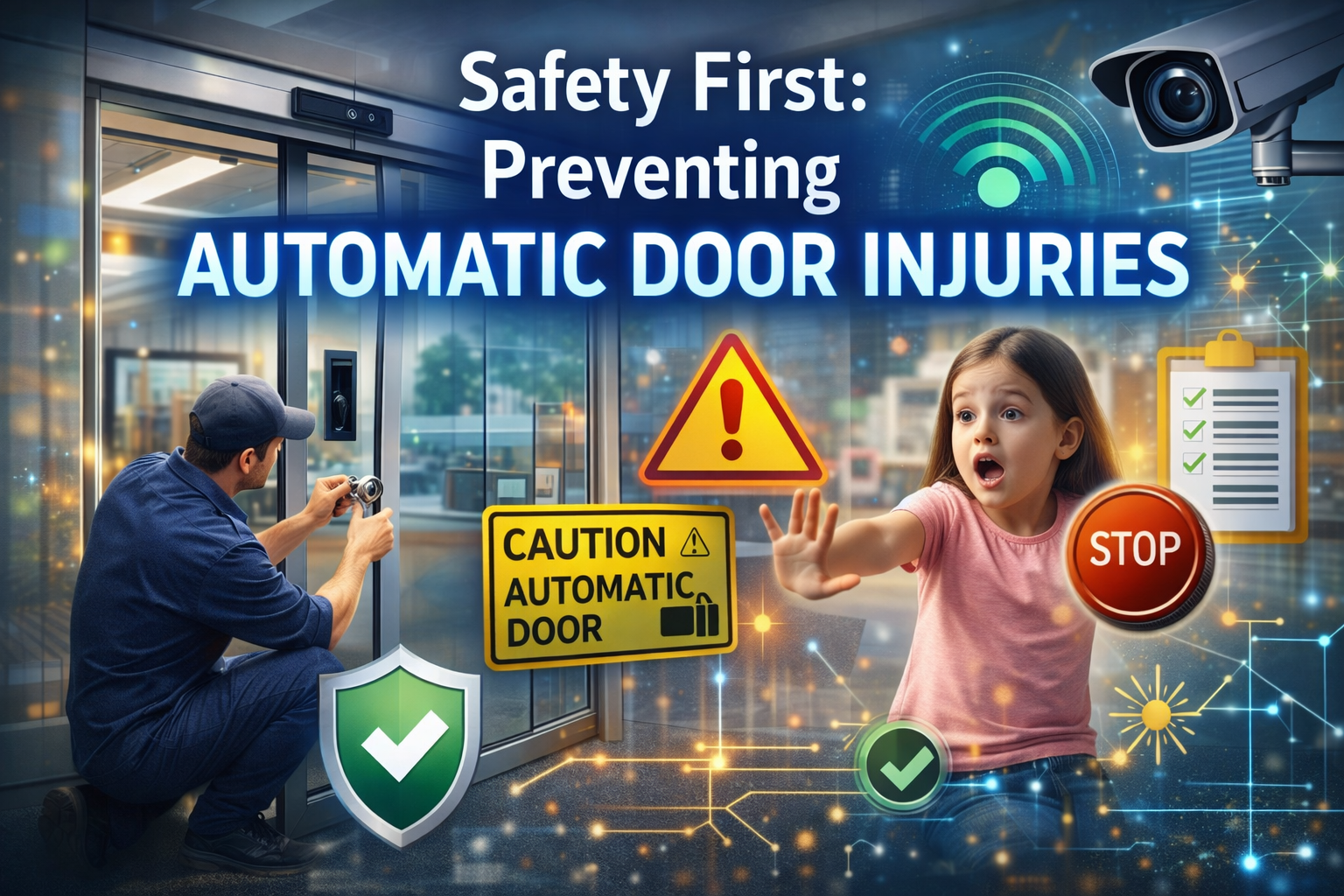
Safety First: Preventing Automatic Door Injuries

Safety First Preventing Automatic Door Injuries

Automatic doors are designed to make life easier. They allow people to enter and exit buildings without pushing or pulling heavy doors. You can find them in shopping malls, hospitals, offices, airports, and many public places. They help improve accessibility, convenience, and traffic flow. However, like any machine, automatic doors can cause injuries if they are not used or maintained properly.

Most automatic door accidents happen because of poor maintenance, faulty sensors, or unsafe behavior. The good news is that these injuries are preventable. With proper care, safety checks, and awareness, automatic doors can operate smoothly and safely for everyone. In this guide, we will explore common risks and practical ways to prevent automatic door injuries.

Understanding How Automatic Door Injuries Happen

Automatic door injuries usually occur when something interferes with the door’s normal operation. This could be a faulty sensor, a mechanical problem, or human error. For example, if a sensor fails to detect a person, the door may close too quickly and cause harm.

Children and elderly people are more vulnerable to door accidents because they move slower or may not notice warning signs. Injuries can also happen when people try to force a door open manually or stand too close to moving parts. Understanding these risks is the first step toward preventing accidents.

Importance of Proper Sensor Function

Sensors are the most important safety feature of an automatic door. They detect movement and ensure the door opens and closes at the right time. If sensors are dirty, blocked, or damaged, they may not work correctly.

Regularly cleaning sensors helps prevent false readings and unexpected door movement. It is also important to check sensor alignment to ensure they cover the correct area. When sensors function properly, they can stop doors from closing when someone is in the way.

Regular Maintenance Reduces Safety Risks

Routine maintenance plays a huge role in preventing injuries. Automatic doors contain moving parts such as motors, rollers, tracks, and control systems. Over time, these parts can wear out or become loose.

When doors are inspected regularly, small problems can be fixed before they become dangerous. Maintenance checks should include testing door speed, examining mechanical components, and ensuring smooth movement. A well-maintained door operates quietly, safely, and reliably.

Keeping Door Areas Clear and Clean

Clutter around automatic doors can create safety hazards. Objects such as boxes, mats, dirt, or debris can block sensors or interfere with door movement. This can cause doors to stop suddenly or fail to detect people.

Keeping the entrance area clean and clear ensures smooth operation. Regular cleaning also prevents dirt from collecting in tracks and mechanical parts. A clean doorway not only improves safety but also extends the lifespan of the door system.

Educating People About Safe Door Usage

Many accidents happen because people do not know how to use automatic doors safely. Simple awareness can prevent most injuries. People should avoid standing too close to doors while waiting and should never try to stop or force a door manually.

Children should be supervised near automatic doors, especially in busy public places. Teaching basic safety habits, such as walking calmly through doors and avoiding running, helps reduce risks. Clear safety signs also remind users to follow safe practices.

Installing Safety Features and Backup Systems

Modern automatic doors include several built-in safety features. These may include motion sensors, pressure-sensitive edges, emergency stop buttons, and backup power systems. Each feature plays a role in preventing accidents.

For example, safety sensors stop doors from closing when an object is detected. Backup power systems ensure doors remain operational during power failures. Installing and maintaining these features provides extra protection in busy environments.

Monitoring Door Speed and Closing Force

Door speed and closing force must be carefully adjusted to prevent injuries. If a door closes too fast or with too much force, it can cause serious harm. Proper settings ensure the door moves smoothly and safely.

Regular testing helps confirm that speed levels are within safety limits. Doors in high-traffic areas may require slower settings to allow more time for people to pass through. Balanced speed improves both safety and comfort.

Importance of Professional Inspections

While basic safety checks can be done regularly, professional inspections are essential. Technicians have the tools and knowledge to identify hidden problems that may not be visible.

Professional servicing includes testing electrical systems, adjusting sensors, and replacing worn components. These inspections help ensure that doors meet safety standards and operate reliably. Scheduling routine professional checks reduces long-term risks.

Emergency Preparedness and Safety Planning

Automatic doors must function correctly during emergencies such as fires or power outages. Emergency plans should include testing backup power systems and ensuring doors unlock when needed.

Clear emergency exit signs and regular safety drills help people respond quickly during critical situations. When automatic doors are part of emergency planning, they can assist safe evacuation rather than becoming obstacles.

Conclusion

Automatic doors are designed to improve convenience, accessibility, and building efficiency. However, safety should always be the top priority. Most automatic door injuries happen because of poor maintenance, blocked sensors, or unsafe behavior.

By performing regular maintenance, keeping door areas clean, educating users, and installing proper safety features, these risks can be greatly reduced. Professional inspections and emergency planning further improve safety and reliability. With the right care and awareness, automatic doors can continue to provide safe and smooth access for everyone.

Posted on

A Complete Guide to Maintaining Metal Doors for Longevity

Metal doors are essential for commercial properties, offering durability and security. However, like any investment, they require regular maintenance to ensure longevity and optimal performance. At Patriot Door and Hardware, we specialize in providing comprehensive solutions for commercial security needs, and we’re here to guide you on how to maintain your metal doors effectively.

Regular Cleaning

Cleaning your metal doors is crucial for maintaining their appearance and functionality. Dirt, grime, and moisture can lead to rust and corrosion. Use a soft cloth or sponge with mild detergent and water to wipe down the surface of the door regularly. After cleaning, rinse with water and dry thoroughly to prevent water spots or damage.

Inspect for Damage

Regular inspections are vital for identifying potential issues before they escalate. Check for dents, scratches, and rust spots that could compromise the door’s integrity. If you notice any signs of wear, address them promptly to prevent further damage. Patriot Door and Hardware offers retrofit and repair services, allowing you to replace or patch up worn areas, ensuring your doors continue to perform at their best.

Lubricate Moving Parts

Metal doors often come with hardware such as hinges, locks, and handles that require regular lubrication. Applying a silicone-based lubricant can ensure smooth operation and prevent wear and tear. Avoid using oil-based products, as they can attract dirt and debris. Regularly check these components and reapply lubricant as needed to ensure effortless functionality.

Environmental Considerations

If your business is located in a coastal area or an environment with high humidity, consider applying protective coatings to guard against corrosion. Additionally, ensuring proper drainage and avoiding water pooling around the entryway can further protect your metal doors.

At Patriot Door and Hardware, we are committed to providing expert solutions and services to keep your commercial security needs secure and functional. With these tips, you can enhance the durability of your metal doors and protect your investment for years to come. Contact us to learn more today!

Contact Us

Posted on

Custom Door Designs: Balancing Security with Style

In an era where aesthetics and safety go hand in hand, custom door designs emerge as a vital component in enhancing both the security and visual appeal of commercial spaces. At Patriot Door and Hardware, we understand that a door is more than just an entry; it’s a statement about your brand and its commitment to safety.

The Need for Security in Design

Custom doors not only provide a unique design but also incorporate advanced locking mechanisms and durable materials that offer heightened protection against unauthorized access. Collaborating with our door specialists enables the tailoring of these doors to meet specific security requirements, ensuring that style does not compromise safety.

Aesthetic Appeal: Making the Right Impression

While security is a top priority, the look of your entrance cannot be ignored. A custom door allows businesses to showcase their brand identity and make a lasting impression on clients and visitors. From sleek glass designs to robust wooden finishes, the ability to select styles, colors, and materials means doors can now reflect a brand’s personality while still being fortified against threats.

Versatility in Customization

Custom doors are not a one-size-fits-all solution; they can be tailored to feature modifications that fit any architectural style or space. Whether it’s adding specialized hardware for enhanced security or designing a door that fits a particular opening, the versatility of custom door designs can meet diverse needs.

Long-Term Investment in Safety

Investing in custom door designs is also a minimal long-term cost. Enhanced security features help mitigate risks, potentially reducing insurance premiums while providing peace of mind. Choosing a reputable company like Patriot Door and Hardware ensures quality products that last and safeguard your investment.

Custom door designs are essential for any commercial establishment looking to balance security and style. By investing in tailored solutions, businesses can create a welcoming environment that reflects their commitment to safety and aesthetics. Contact Patriot Door and Hardware to get started today!

Contact Us

Posted on

The Impact of Door Design on Business Security and Curb Appeal

When it comes to ensuring the safety and attractiveness of your business, the design of your doors plays a pivotal role. At Patriot Door and Hardware, we understand that commercial security is not just about functionality; it’s about creating the right impression and enhancing your property’s curb appeal. Let’s delve into how door design influences both security and aesthetics.

Enhancing Security Features

Security is paramount for any business, and the right door design can significantly bolster protection. Patriot Door and Hardware specializes in offering factory-certified doors equipped with advanced locking systems, reinforcing your first line of defense against unauthorized entry. Our custom modification services allow us to tailor doors that meet specific security needs, ensuring your business remains safe and secure without compromising style.

Boosting Curb Appeal

The design of your business entrance is often the first impression clients and customers receive. A stylish, well-crafted door invites customers in while portraying professionalism and attention to detail. Custom doors, specifically designed to reflect your brand identity, can enhance your business’s image and attract potential clients, which increases foot traffic and overall sales.

Durability and Longevity

Aesthetics and security go hand-in-hand with durability. Commercial doors must withstand daily wear, and investing in high-quality solutions pays off in the long run. Patriot Door and Hardware provides retrofit and repair services, ensuring your doors remain functional and visually appealing for years to come.

Custom Solutions for Unique Needs

Every business is different, and your doors should reflect that. Our builder solutions cater to a variety of projects, offering tailored door designs that meet your security and aesthetic requirements. Whether you need doors for an entire building or modifications to existing ones, Patriot Door and Hardware has the expertise to deliver customized solutions for your security journey.

By partnering with Patriot Door and Hardware, you can ensure that you have the right doors that enhance safety and attract customers. Our comprehensive solutions provide the perfect mix of function and style for any commercial space, helping you achieve the best for your business. Contact us to get started today!

Contact Us

Posted on

Should You Upgrade to Automatic Doors? Key Considerations for Businesses

At Patriot Door and Hardware, we specialize in providing comprehensive commercial security solutions, including automatic doors tailored to your needs. If you’re contemplating an upgrade for your doors, here are some key considerations to help you determine if automatic doors are the right choice for your business.

Enhanced Accessibility

Automatic doors improve accessibility for all customers, including those with disabilities or mobility challenges. By making your business more welcoming, you elevate your brand image, an essential component of your overall strategy. Patriot Door and Hardware offers a range of automatic door solutions designed to meet accessibility standards effectively.

Improved Traffic Flow

In high-traffic areas, such as retail settings and office buildings, automatic doors can significantly enhance traffic flow. They open seamlessly, allowing for smooth entry and exit while reducing congestion during peak hours. This efficiency can create a more pleasant customer experience.

Energy Efficiency

Automatic doors can contribute to energy savings in your facility. When equipped with sensors, these doors minimize the time they remain open, reducing the loss of conditioned air. This not only helps in maintaining a consistent indoor temperature but can also lower heating and cooling costs, ultimately benefiting your bottom line.

Increased Security

Upgrading to automatic doors can also enhance your building’s security. Many modern automatic doors come with advanced locking mechanisms and access control systems that allow you to regulate who can enter your premises. This added layer of security is especially beneficial for businesses that require restricted access to certain areas.

Upgrading to automatic doors can provide numerous benefits, from enhanced accessibility to improved energy efficiency and security. At Patriot Door and Hardware, we understand the importance of finding the right solutions for your commercial needs. If you’re ready to make the transition, let our experienced team guide you in selecting and installing the ideal automatic door system for your business. Contact us today!

Contact Us

Posted on

The Benefits of Upgrading to Smart Lock Technology

For businesses seeking reliable and innovative solutions, smart lock technology offers an unparalleled upgrade. At Patriot Door and Hardware, we specialize in providing top-quality security solutions tailored to your commercial needs, and smart locks are a vital component of a comprehensive security strategy. Here are the key benefits of upgrading to smart locks.

Enhanced Security Features

Smart locks provide enhanced security through features like encryption, biometric access, and remote monitoring. These locks are designed to resist unauthorized access, significantly lowering the risk of break-ins. At Patriot Door and Hardware, our factory-certified products ensure your business benefits from the latest in security technology, helping you protect your assets effectively.

Remote Access and Control

With smart locks, you can manage access remotely, allowing you to grant or revoke permissions from anywhere. This capability is ideal for businesses with varying staff needs, enabling you to control access for temporary employees or service providers easily.

Audit Trails for Accountability

One of the remarkable features of smart locks is their ability to create audit trails. These logs record who accessed your premises and when, providing a level of accountability that traditional locks cannot match. This feature is invaluable for maintaining compliance with safety regulations and understanding security vulnerabilities.

Customization Options

Smart lock systems offer flexibility, allowing you to tailor access controls to meet your specific business needs. With options for integration with other security systems and custom access schedules, you can easily adapt your security as your business grows.

Upgrading to smart lock technology is a proactive step towards enhancing your business’s security. At Patriot Door and Hardware, we can help you explore smart lock options that suit your commercial needs, ensuring your business is protected and equipped for the future. Contact us to get started today!

Contact Us