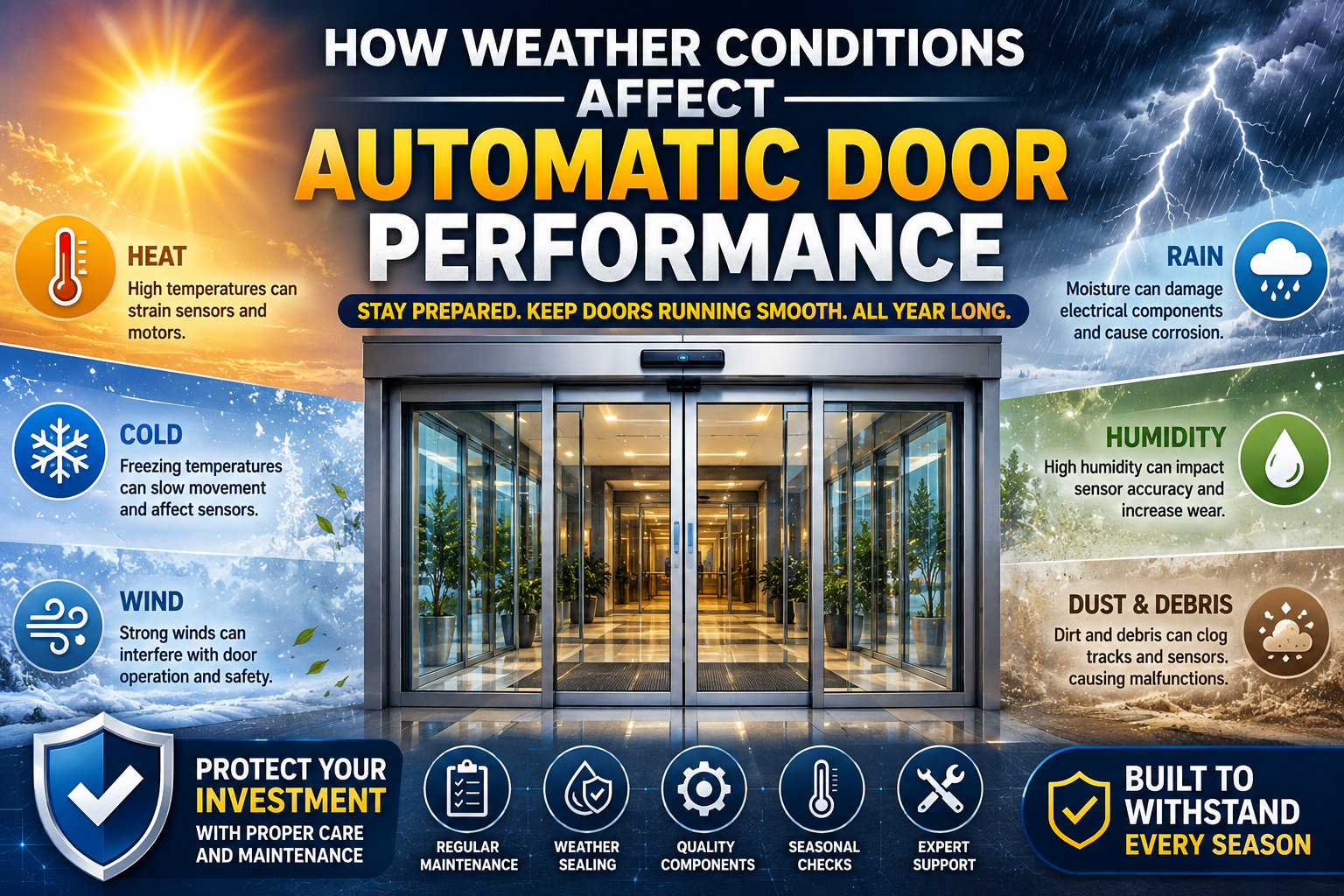
Automatic doors are built to handle daily use, but weather conditions can still affect how well they perform. Rain, heat, cold temperatures, wind, and humidity all impact the movement and reliability of automatic doors. In busy commercial buildings, even small weather-related issues can lead to slow operation, higher energy costs, or safety concerns.
Many business owners only focus on maintenance when a problem appears. However, understanding how weather affects automatic doors can help prevent damage before it happens. In this blog, we will explore how different weather conditions influence automatic door systems and what you can do to keep them working smoothly all year long.
Impact of Extreme Heat on Automatic Doors
Hot weather can affect both the mechanical and electronic parts of an automatic door system. Continuous exposure to high temperatures may cause motors to overheat or reduce the performance of sensors. Metal components can also expand slightly in extreme heat, affecting alignment and smooth movement.
Glass doors exposed to strong sunlight may create extra strain on cooling systems because they allow heat to enter the building. In some cases, heat can even interfere with motion sensors, causing unnecessary door openings. Regular inspection during summer helps reduce these problems and keeps the system operating efficiently.
Cold Temperatures and Freezing Conditions
Cold weather creates different challenges for automatic doors. Ice, frost, and freezing temperatures can make doors slower to open and close. Tracks and rollers may become stiff, especially if lubrication is not suitable for cold conditions.
Snow and ice buildup around entrances can also block sensors or prevent smooth movement. In severe winter conditions, motors work harder, which increases wear on the system. Proper weather-resistant seals and winter maintenance checks help protect the door from cold-related damage.
How Rain and Moisture Affect Door Systems
Rainwater and moisture can damage electrical and mechanical components if the system is not properly protected. Water entering sensor units or control panels may lead to short circuits or inconsistent performance.
Moisture can also cause rust and corrosion on metal parts over time. Sliding door tracks are especially vulnerable because water and dirt often collect in them. Regular cleaning and waterproof sealing help prevent long-term moisture damage and improve durability.
The Effect of Strong Winds on Automatic Doors
Wind is one of the most common causes of automatic door problems, especially in large commercial buildings. Strong gusts can force doors to open unexpectedly or make it difficult for them to close fully.
High wind pressure may also strain motors and hinges. In revolving doors, wind can affect balance and smooth rotation. Installing wind-resistant automatic doors and adjusting sensor sensitivity can help maintain safe and stable operation in windy environments.
Humidity and Sensor Performance
High humidity levels can interfere with electronic systems and reduce sensor accuracy. Condensation may form inside sensitive components, causing delayed responses or false detections.
Humidity also increases the risk of corrosion, especially in coastal areas where salty air is present. Businesses located in humid climates should schedule regular inspections to ensure sensors and electrical parts remain dry and functional.
Dust, Sand, and Airborne Debris
In dry or windy environments, dust and debris can easily collect in automatic door tracks and sensors. Sand particles may damage moving parts and create friction, leading to noisy or uneven operation.
Dirty sensors may fail to detect people correctly, creating safety concerns. Frequent cleaning is essential in areas with high dust exposure. Protective covers and sealed components also help reduce the impact of airborne debris.
Energy Efficiency During Seasonal Changes
Weather conditions directly affect a building’s energy use, and automatic doors play an important role in controlling indoor temperature. During summer and winter, doors that stay open too long allow heated or cooled air to escape.
Modern automatic doors often include smart settings that adjust opening times based on traffic and temperature conditions. Proper insulation and weather sealing improve energy efficiency and reduce utility costs throughout the year.
Importance of Seasonal Maintenance
Seasonal maintenance helps automatic doors perform better in changing weather conditions. Before winter, technicians should inspect seals, lubricate moving parts, and test sensors. Before summer, cooling and ventilation around electronic components should be checked.
Routine maintenance reduces the risk of sudden failures during extreme weather. It also helps identify small issues before they become expensive repairs. Businesses that follow seasonal maintenance schedules usually experience fewer operational problems.
Choosing Weather-Resistant Automatic Doors
Not all automatic doors are designed for the same environment. Businesses located in coastal, snowy, or extremely hot regions should choose doors built specifically for those conditions.
Weather-resistant doors use stronger materials, better sealing systems, and advanced sensors that can handle temperature changes. Investing in the right door system improves long-term performance and lowers maintenance costs.
Conclusion
Weather has a major impact on the performance, safety, and lifespan of automatic doors. Heat, cold, rain, wind, humidity, and dust all create unique challenges that can affect daily operation. Without proper care, these conditions may lead to breakdowns, higher energy costs, and safety risks.
By understanding how weather affects automatic doors and following regular maintenance practices, businesses can keep their systems running smoothly year-round. Choosing weather-resistant solutions and performing seasonal inspections will help improve reliability, efficiency, and user safety in every season.