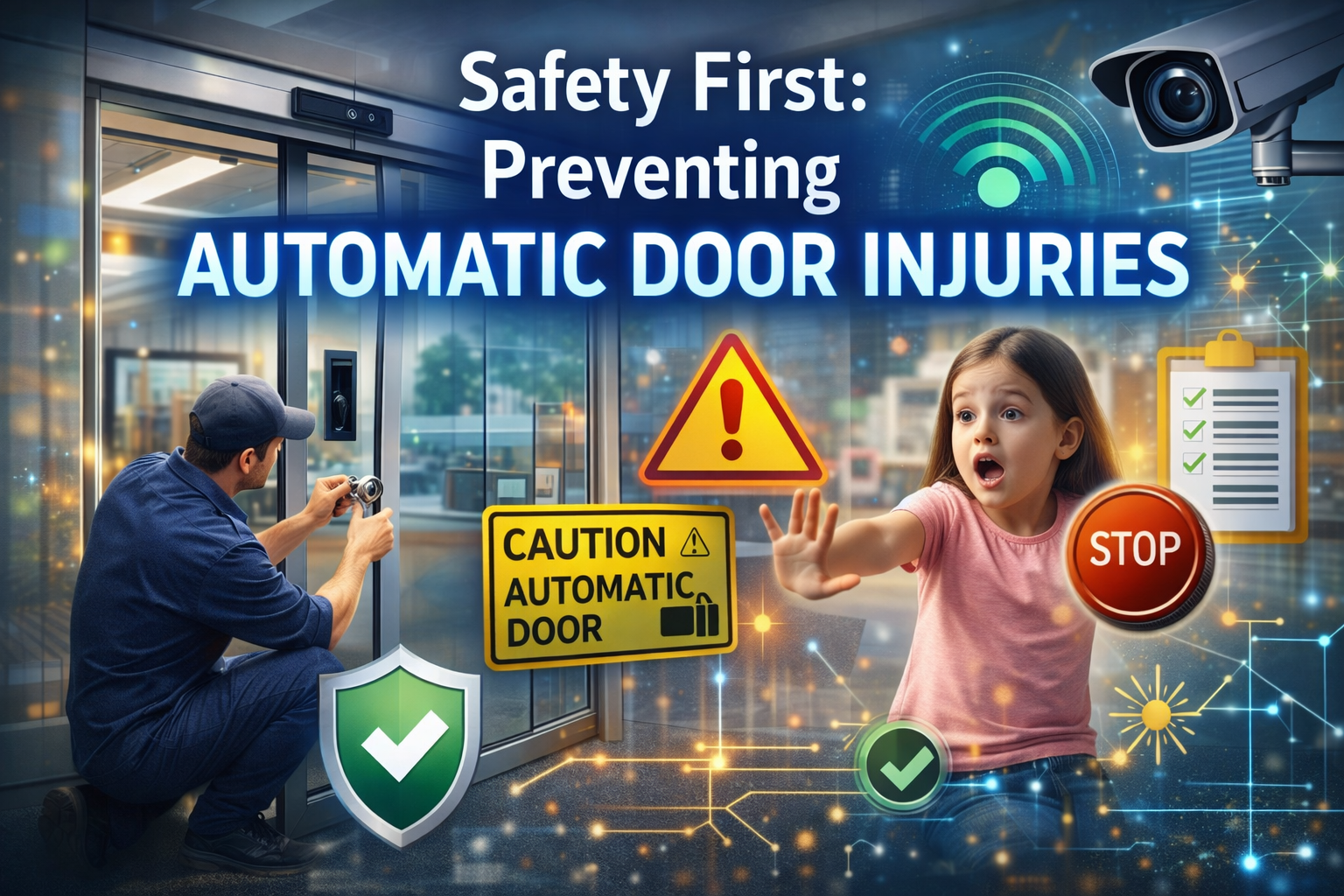
Automatic doors are designed to make life easier. They allow people to enter and exit buildings without pushing or pulling heavy doors. You can find them in shopping malls, hospitals, offices, airports, and many public places. They help improve accessibility, convenience, and traffic flow. However, like any machine, automatic doors can cause injuries if they are not used or maintained properly.
Most automatic door accidents happen because of poor maintenance, faulty sensors, or unsafe behavior. The good news is that these injuries are preventable. With proper care, safety checks, and awareness, automatic doors can operate smoothly and safely for everyone. In this guide, we will explore common risks and practical ways to prevent automatic door injuries.
Understanding How Automatic Door Injuries Happen
Automatic door injuries usually occur when something interferes with the door’s normal operation. This could be a faulty sensor, a mechanical problem, or human error. For example, if a sensor fails to detect a person, the door may close too quickly and cause harm.
Children and elderly people are more vulnerable to door accidents because they move slower or may not notice warning signs. Injuries can also happen when people try to force a door open manually or stand too close to moving parts. Understanding these risks is the first step toward preventing accidents.
Importance of Proper Sensor Function
Sensors are the most important safety feature of an automatic door. They detect movement and ensure the door opens and closes at the right time. If sensors are dirty, blocked, or damaged, they may not work correctly.
Regularly cleaning sensors helps prevent false readings and unexpected door movement. It is also important to check sensor alignment to ensure they cover the correct area. When sensors function properly, they can stop doors from closing when someone is in the way.
Regular Maintenance Reduces Safety Risks
Routine maintenance plays a huge role in preventing injuries. Automatic doors contain moving parts such as motors, rollers, tracks, and control systems. Over time, these parts can wear out or become loose.
When doors are inspected regularly, small problems can be fixed before they become dangerous. Maintenance checks should include testing door speed, examining mechanical components, and ensuring smooth movement. A well-maintained door operates quietly, safely, and reliably.
Keeping Door Areas Clear and Clean
Clutter around automatic doors can create safety hazards. Objects such as boxes, mats, dirt, or debris can block sensors or interfere with door movement. This can cause doors to stop suddenly or fail to detect people.
Keeping the entrance area clean and clear ensures smooth operation. Regular cleaning also prevents dirt from collecting in tracks and mechanical parts. A clean doorway not only improves safety but also extends the lifespan of the door system.
Educating People About Safe Door Usage
Many accidents happen because people do not know how to use automatic doors safely. Simple awareness can prevent most injuries. People should avoid standing too close to doors while waiting and should never try to stop or force a door manually.
Children should be supervised near automatic doors, especially in busy public places. Teaching basic safety habits, such as walking calmly through doors and avoiding running, helps reduce risks. Clear safety signs also remind users to follow safe practices.
Installing Safety Features and Backup Systems
Modern automatic doors include several built-in safety features. These may include motion sensors, pressure-sensitive edges, emergency stop buttons, and backup power systems. Each feature plays a role in preventing accidents.
For example, safety sensors stop doors from closing when an object is detected. Backup power systems ensure doors remain operational during power failures. Installing and maintaining these features provides extra protection in busy environments.
Monitoring Door Speed and Closing Force
Door speed and closing force must be carefully adjusted to prevent injuries. If a door closes too fast or with too much force, it can cause serious harm. Proper settings ensure the door moves smoothly and safely.
Regular testing helps confirm that speed levels are within safety limits. Doors in high-traffic areas may require slower settings to allow more time for people to pass through. Balanced speed improves both safety and comfort.
Importance of Professional Inspections
While basic safety checks can be done regularly, professional inspections are essential. Technicians have the tools and knowledge to identify hidden problems that may not be visible.
Professional servicing includes testing electrical systems, adjusting sensors, and replacing worn components. These inspections help ensure that doors meet safety standards and operate reliably. Scheduling routine professional checks reduces long-term risks.
Emergency Preparedness and Safety Planning
Automatic doors must function correctly during emergencies such as fires or power outages. Emergency plans should include testing backup power systems and ensuring doors unlock when needed.
Clear emergency exit signs and regular safety drills help people respond quickly during critical situations. When automatic doors are part of emergency planning, they can assist safe evacuation rather than becoming obstacles.
Conclusion
Automatic doors are designed to improve convenience, accessibility, and building efficiency. However, safety should always be the top priority. Most automatic door injuries happen because of poor maintenance, blocked sensors, or unsafe behavior.
By performing regular maintenance, keeping door areas clean, educating users, and installing proper safety features, these risks can be greatly reduced. Professional inspections and emergency planning further improve safety and reliability. With the right care and awareness, automatic doors can continue to provide safe and smooth access for everyone.